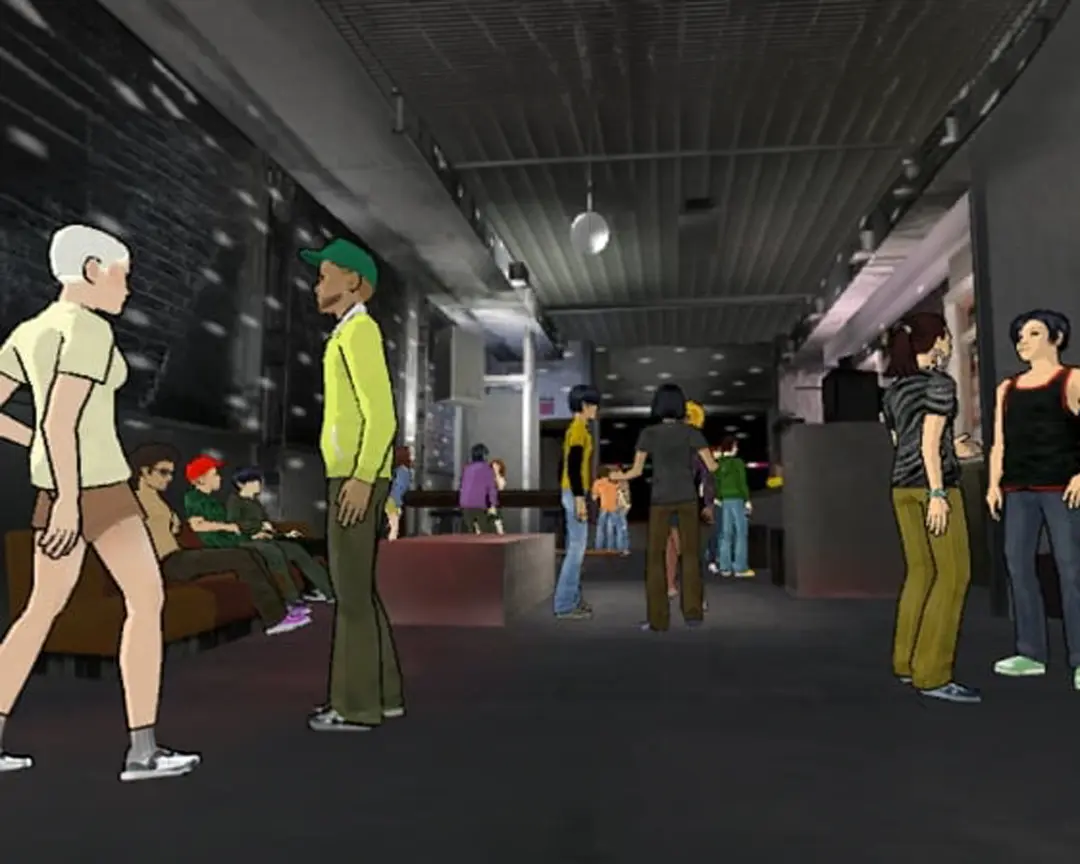
Jeff Yapp and his team at MTV built the Virtual Lower East Side, a 3D internet-based social network modeled with real care on an influential strip of Manhattan. Fans could explore virtual versions of real venues, meet each other, and attend live performances by indie bands, all of it years before this kind of experience went mainstream.
A bridge between seasons
vLES existed for a reason beyond novelty. Shows like Laguna Beach and The Hills had long gaps between seasons, and the network needed a way to keep fans connected in between and to build deeper relationships with its most passionate viewers. A persistent virtual world where fans made avatars, experienced music, and engaged with artists was the bridge, built before social media made that kind of access ordinary.
A sponsor on a niche audience
The site drew about 15,000 average daily visitors, a deliberately niche community around indie music and alternative culture. On that base, Jeff negotiated a brand sponsorship with PepsiCo, which wanted to associate itself with a tech-forward, indie audience. It funded and advertised inside the world, a model that looks obvious now and was ahead of its time then.
A pioneer the press noticed
vLES earned real attention for its blend of technology, music, and culture, including a feature review in The New York Times, and became a reference point in both tech and music circles. It also gave independent artists a genuine new stage to reach a tech-savvy audience. Every idea that later showed up in virtual concerts and metaverse events was prefigured here.